

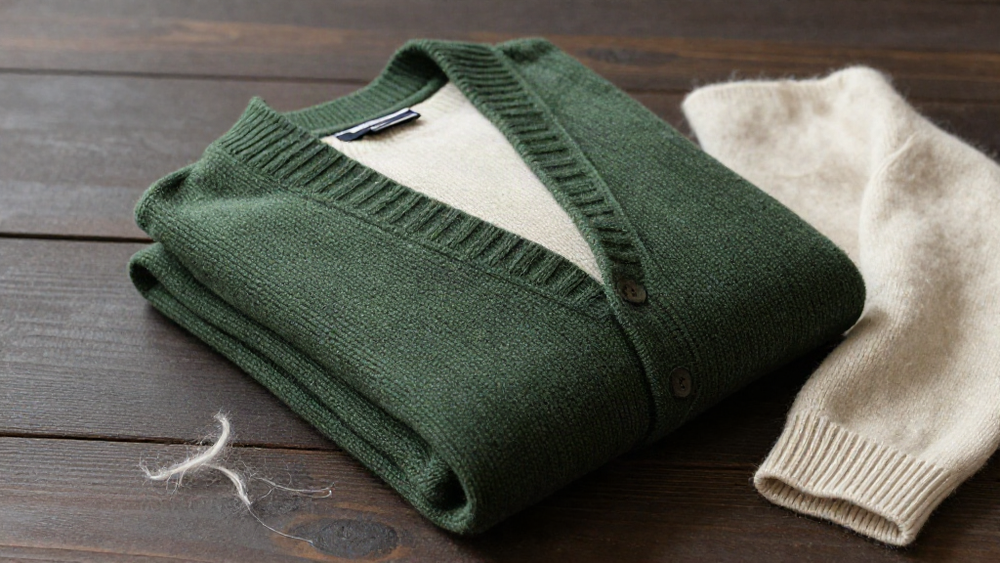
Shetland wool or cashmere—this is the question almost every man faces when he wants to invest in a really good cardigan. Both materials feel high-quality, both keep you warm, and both cost more than just grabbing a cotton jacket on a whim. The difference isn’t a matter of better or worse, but of character: While Shetland wool is textured, sturdy, and durable, cashmere shines in its softness and lightness. We’ll take a look at what’s behind these fibers—and which choice is right for which winter look.
Why the choice of material really matters for a cardigan
More than any other cardigan, a cardigan bears the hallmark of its material. Unlike a sweater, which is mostly hidden under a jacket, a cardigan thrives on its open silhouette: its collar, button placket, and texture remain visible. That’s exactly why it’s worth taking a closer look at the fiber. If you understand how Shetland wool differs from cashmere and cashmere blends, you’ll not only choose a warmer option but also make a more informed choice—and end up with a garment that retains its character for many winters to come.
Shetland wool: textured, robust, and full of character
Shetland wool originates from the sheep of the Shetland Islands and is one of the classic yarns in a man’s wardrobe. It is characterized by a slightly rough, fibrous surface with visible nap—a texture that immediately conveys quality. This texture is not a flaw, but rather its greatest asset: Shetland wool is durable, retains its shape well, and withstands the rigors of everyday life far better than delicate yarns. It provides reliable warmth without feeling heavy and develops a pleasant patina over time.
A prime example is the Gran Sasso Shetland Cardigan in moss green. Made in Italy, with a shawl collar and textured surface, it’s exactly the kind of layering piece that works just as well under a coat as it does on its own over a shirt. The deep moss green hue has an earthy feel and, when paired with denim or dark wool, quickly becomes a subtle yet statement-making accent.
Cashmere and Cashmere Blends: Softness with Character
Cashmere is the finest and lightest of the classic wool fibers. The fibers are thinner and more supple, which is why cashmere and cashmere-blend knits feel instantly soft against the skin—ideal for men who want to wear knitwear directly against their skin and avoid any itchiness. Pure cashmere is luxurious but expensive and delicate; that’s why many brands opt for blends that combine softness with everyday practicality.
The Never Laundry Cotton/Cashmere Raglan in off-white takes exactly this approach. The cotton gives the knit shape and stability, while the cashmere content ensures a soft, slightly warm feel. The result is a sweater with a subtle, luxurious appeal that’s comfortable to wear and pairs effortlessly with jeans and tailored trousers—in off-white, it offers a bright, cheerful contrast to dark winter jackets.
Warmth and Weight: Which Keeps You Warmer?
In terms of pure warmth, the two materials are closer than you might think—the real difference lies in the ratio of warmth to weight. Shetland wool provides warmth through the dense, airy structure of the yarn and feels slightly more substantial. Cashmere offers warmth despite its lighter weight because its fine fibers trap more insulating air. For bitterly cold days under a jacket, the textured Shetland cardigan is the more durable base layer; for mild days, long meetings, or wearing indoors, the lighter cashmere knit is the more comfortable choice.
Texture and Comfort
It’s all about the feel. Shetland wool has a dry, slightly rough texture with visible weave—rustic in the best sense and typical of classic men’s knitwear. Cashmere and cashmere blends, on the other hand, feel soft, almost silky, and slightly cooler at first, before they adjust to body temperature. Those with sensitive skin or who are wearing knitwear directly against the skin for the first time will prefer the softer blend; those seeking the firm, textured character of a genuine Shetland knit will stick with the wool.
Care and Durability
Shetland wool is easier to care for and more forgiving: it’s less prone to pilling, retains its shape, and ages gracefully. Cashmere requires more attention—it prefers hand washing or a wool cycle, drying flat, and occasional airing out instead of washing. If you take the care instructions seriously, you’ll enjoy both materials for many years to come. The basic rule: Shetland rewards durability with longevity; cashmere rewards care with lasting softness.
Moss green or off-white: The cardigan as a layering staple
Color and material choices go hand in hand. A moss green Shetland cardigan adds depth and texture to an outfit and looks both grounded and distinctive under a dark jacket or paired with Jacob Cohën jeans. A wool-white cashmere knit brightens the look and provides a calm backdrop for darker denim, leather accessories, and woolen coats. Combine both—the textured cardigan as the outer layer and the soft cotton/cashmere raglan underneath—for a layered look that keeps you warm while still appearing light.
Conclusion
Shetland wool or cashmere isn’t an either/or question, but a matter of how you wear them. Shetland is the robust, textured choice—durable, warm, and full of character. Cashmere and cashmere blends are the soft, lightweight choice—luxurious to the touch and ideal for sensitive skin or warmer days. If you’re planning to buy just one cardigan to wear all winter, opt for Shetland wool; for a luxurious, versatile second piece, choose a cashmere blend. You’ll find both in our collection—and if you’re unsure, we’ll work with you one-on-one to ensure that the material, color, and fit all come together perfectly.